Additional information
| Weight |
|---|
$65.00
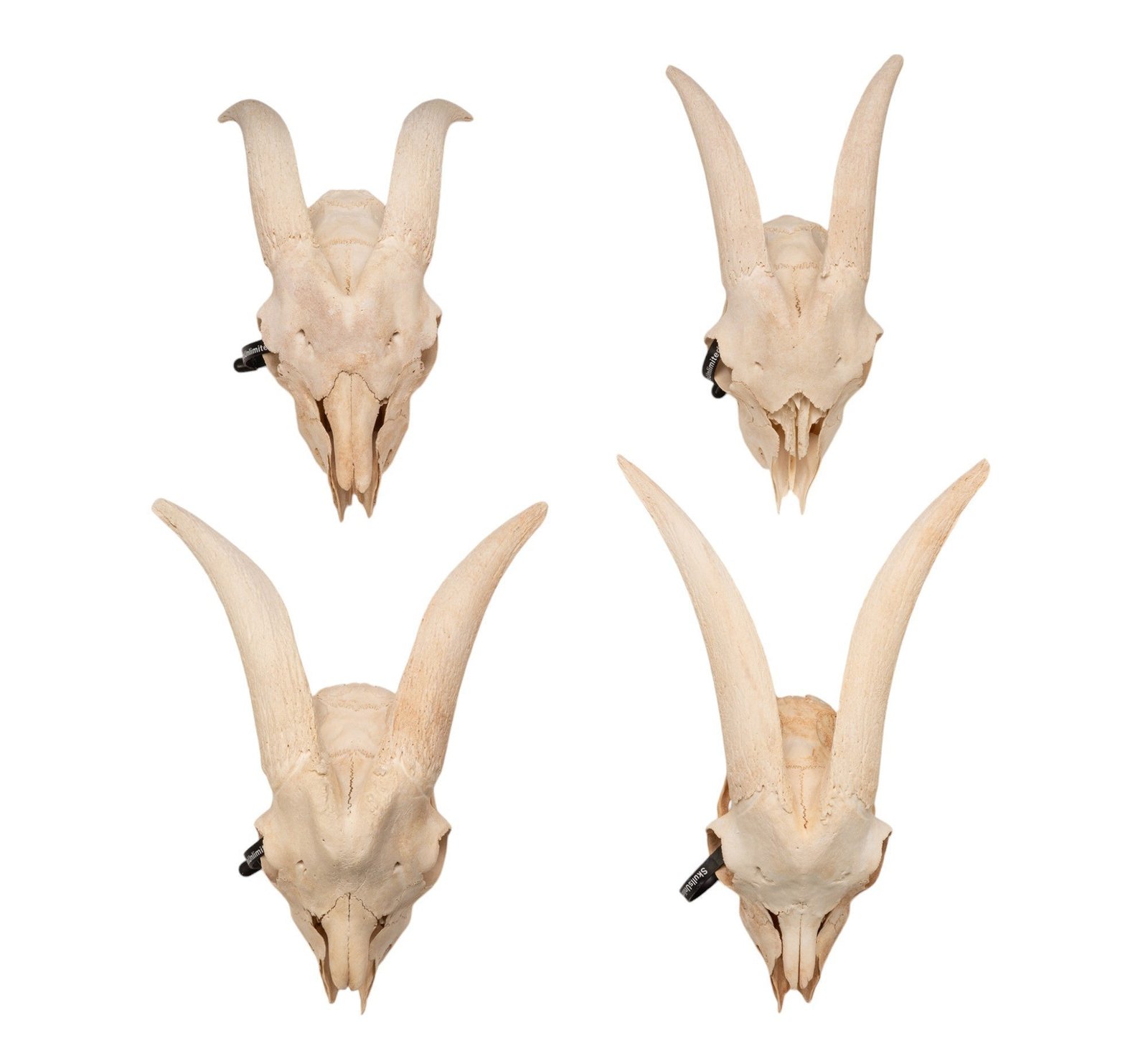
The domestic goat has been utilized by humans for over 8,000 years. They have been bred for their meat, milk, and wool and currently, there are over 400 domestic breeds of goat found worldwide. Feral goat populations can be very destructive to the natural environment and will often out-compete native herbivorous species for food. Both male and female goats grow horns, but the males’ are often much larger.nnSpecifications:nnThe photos shown are examples of what your specimen will approximately look like. Each skull is unique and will vary in size, shape, color, etc.nnC-Quality goats will exhibit damage such as missing incisor and/or nasal bones, and may exhibit atypical colorationnD-Quality goats will exhibit more extensive and severe damage such as damaged or missing bones, damaged or cut horn cores, and/or atypical colorationnnAll qualities m ay be missing teethnnSmall skulls will have short and/or thin horns. Medium-to-large skulls will have longer, thicker, and/or wider horns.nSmall Skull Dimensions:nnAverage Greatest Length 18-28 cm (7.1-11 in.)nAverage Greatest Width 11-14 cm (4.3-5.5 in.)nAverage Greatest Height 11 cm (4.3 in.)nnMedium-to-large Skull Dimensions:nnAverage Greatest Length 24-32 cm (9.4-12.6 in.)nAverage Greatest Width 19-29 cm (7.5-11.4 in.)nAverage Greatest Height 13 cm (5.1 in.)
| Weight |
|---|